

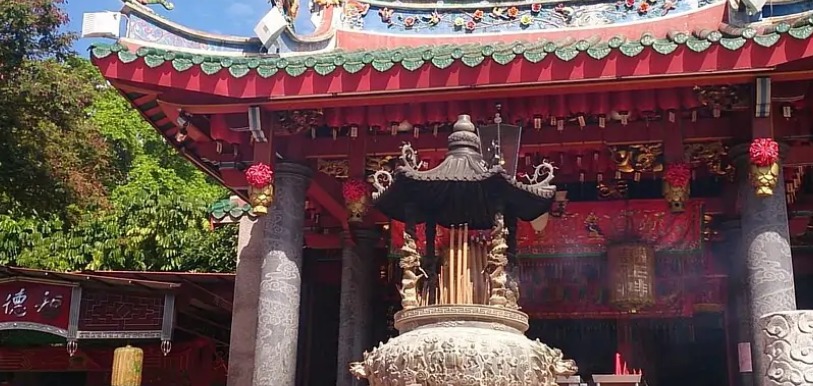
Faktain News – Nestled in the heart of Singkawang City, West Kalimantan, the Tua Pek Kong Temple stands as far more than just a place of worship. It serves as a profound emblem of tolerance, enduring history, and the rich tapestry of Chinese culture meticulously preserved over centuries. This magnificent temple has become a cornerstone of religious tourism in Singkawang, holding a unique allure for anyone eager to delve into the harmonious coexistence of diverse cultures.
A Deep Dive into Tua Pek Kong Singkawang’s Storied Past
Among Indonesia’s collection of ancient Chinese temples, Tua Pek Kong Singkawang proudly ranks as one of the oldest and most authentic. Its origins are estimated to date back to 1878. What began as a vital spiritual and social hub for the overseas Chinese community—primarily migrants from Southern China—gradually evolved into a definitive icon of the “City of a Thousand Temples,” a fitting moniker for Singkawang.
The temple structure commands attention, standing robustly on Jalan Sejahtera, directly in the city center. Its distinctive Chinese architectural style immediately captivates observers, particularly the gracefully curved roof adorned with intricate ornaments of dragons, lions, and phoenixes. Every angle and corner exudes a sacred aura, infused with profound philosophical meaning.
“Upon first stepping into Klenteng Tua Pek Kong, I was immediately struck by a sense of peace, coupled with awe at the architectural detail and the distinctive aroma of incense. This place seemed to transport me through a time warp into the past.”
— Penulis WonderfulIndonesia.co.id
The Enduring Significance of Tua Pek Kong Temple for the Community
The Tua Pek Kong Temple transcends its role as merely a place of devotion. It functions as a vibrant cultural and social nucleus. Here, Singkawang’s Chinese community participates in a myriad of traditional ceremonies, religious rituals, and grand celebrations, including the widely renowned Cap Go Meh festival.
During these festivities, the temple buzzes with thousands of visitors from various regions, coming either to worship or simply to witness the captivating rituals. The spectacle of lion dances (barongsai), tatung (spirit mediums), and elaborate deity processions creates an extraordinary attraction. Remarkably, many non-Chinese residents also immerse themselves in the joyous atmosphere, demonstrating how this temple truly embodies inter-ethnic harmony in Singkawang.
Meet the Principal Deity Tua Pek Kong
Tua Pek Kong (Hokkien 大伯公, pinyin Dà Bó Gōng) is revered as the guardian deity for Chinese communities living abroad. His original name is believed to be Zhang Li, a benevolent figure held in high esteem for his wisdom and compassionate assistance to those far from home. Statues of Tua Pek Kong typically occupy the temple’s main altar, distinguished by his majestic attire and dignified countenance.
Devotees believe that venerating Tua Pek Kong bestows safety, ensures financial prosperity, and offers protection from misfortune.
The Shrine of Cai Shen Ye, the God of Wealth, at Tua Pek Kong Temple
Beyond Tua Pek Kong, another altar consistently draws considerable attention from visitors—the Altar of Cai Shen Ye, the God of Money or God of Wealth in Chinese belief.
Who Is Cai Shen Ye?
Cai Shen Ye (财神爷), also recognized as Zhao Gongming, is a deity believed to bring good fortune, riches, and prosperity. The icon of Cai Shen Ye is easily identifiable. He is typically depicted in regal attire, wielding a golden staff, and holding a scroll inscribed with “招财进宝” (zhao cai jin bao), which translates to “inviting wealth and treasures.”
The Altar of Cai Shen Ye at Tua Pek Kong Temple is perpetually laden with offerings of fruit, flowers, and incense, especially in the lead-up to Chinese New Year.
The Tradition of Praying for Prosperity at Cai Shen Ye’s Altar
For many Chinese devotees, praying at Cai Shen Ye’s altar is an indispensable ritual. They arrive bearing incense and offering special paper money (fortune money), all while hoping for bountiful prosperity in the coming year.
“I myself once joined in prayer at this God of Wealth altar, simply seeking blessings and legitimate prosperity for my family. The spiritual atmosphere felt distinctly different, seemingly instilling motivation and optimism for the days ahead.”
— Penulis WonderfulIndonesia.co.id
Myths and Beliefs Surrounding Cai Shen Ye
Numerous oral traditions recount alleged miracles attributed to prayers directed at Cai Shen Ye. Some claim their businesses flourished after praying at this altar, while others firmly believe that praying to Cai Shen Ye at the start of each year is essential to avoid financial hardship.
The Unparalleled Uniqueness and Charm of Tua Pek Kong Temple
Beyond its historical and religious significance, the temple captivates visitors with its distinctive architecture and profoundly Instagrammable atmosphere. Here are some key unique features worth knowing:
Ornaments and Interiors Teeming with Meaning
Every carving, painting, and statue within the temple carries its own symbolic weight. Dragons symbolize power and bravery, the phoenix represents good fortune, while lion statues stand as guardians against malevolent spirits.
An Outdoor Area Brimming with Activity
In the temple’s front courtyard, visitors frequently encounter a bustling array of social activities, from food bazaars and artistic performances to photo sessions with tourists. During Cap Go Meh, the temple grounds truly transform into the vibrant epicenter of city life.
A Favorite Photo Spot for Travelers
Many travelers flock here not only for spiritual devotion but also to capture stunning photographs against the temple’s exotic architectural backdrop. It is not uncommon to see pre-wedding shoots or families simply immortalizing their holiday memories here.
Tua Pek Kong Temple and the Cap Go Meh Festival
The Cap Go Meh festival and Tua Pek Kong Temple are inseparable, like two sides of the same coin. Each year, Singkawang’s Cap Go Meh festival draws thousands of visitors from both domestic and international destinations. The awe-inspiring procession of tatung (spirit mediums), which passes directly through the temple, stands as the primary spectacle.
Tua Pek Kong Singkawang effectively becomes the celebratory heart, where all spiritual activities, entertainment, and traditions converge into a singular, vibrant experience.
“Witnessing the Cap Go Meh festivities around Klenteng Tua Pek Kong is an unforgettable experience. The blend of colorful lion dances, the rhythmic beat of drums, and the fragrant incense creates a magical atmosphere found only in Singkawang.”
— Penulis WonderfulIndonesia.co.id
Access and Visitor Tips for Tua Pek Kong Temple
For travelers, this temple is remarkably accessible from the city center. It is approximately a 10-minute journey from the main bus terminal or station and can be reached via public or private transportation.
Tips for your visit:
- Dress modestly and avoid loud noises.
- If taking photographs, please respect worshippers engaged in prayer.
- Consider lighting incense and praying at an altar to personally experience the spiritual ambiance.
- Visit during the morning or late afternoon for cooler temperatures and more photogenic lighting.
Why Tua Pek Kong Singkawang Stands Apart from Temples in Medan or Jakarta
While all serve as places of worship for the Chinese community, Tua Pek Kong Temple in Singkawang possesses a distinct set of characteristics that differentiate it from temples in larger cities such as Medan or Jakarta. These distinctions are evident not only in its architecture and historical narrative but also in the profound cultural values, traditions, and the vibrant social interactions thriving within its vicinity.
The Enduring Legacy of the Hakka Peranakan Chinese Community
Tua Pek Kong Temple Singkawang was founded and is sustained by the Hakka Peranakan Chinese community, who have long established roots in West Kalimantan. The Hakka community in Singkawang maintains exceptionally strong social bonds and has remarkably preserved ancestral traditions through generations. In contrast, temples in Medan or Jakarta often cater to Chinese communities with more diverse backgrounds, including Hokkien, Cantonese, or Teochew. This influences the cultural atmosphere, ceremonies, and even the types of offerings found in each temple.
“I felt an incredibly strong sense of kinship at Klenteng Tua Pek Kong Singkawang, starkly different from the larger, more modernized temples in Jakarta that feel more like living museums.”
— Penulis WonderfulIndonesia.co.id
The Unique Tatung Ritual and Cap Go Meh Celebrations
One primary differentiator is the presence of the tatung tradition during Cap Go Meh in Singkawang, making Tua Pek Kong Temple the central hub for this ritual. Tatung is a spiritual practice where a medium is believed to be possessed by the spirit of a deity or ancestor, demonstrating extraordinary feats such like piercing their body with sharp objects without injury.
While Cap Go Meh is indeed celebrated enthusiastically in Medan or Jakarta, the tatung ritual is extremely rare, almost non-existent. This particular aspect makes Cap Go Meh in Singkawang, with the temple at its bustling core, a national and even international draw.
Strategic Location and Unwavering Openness to Visitors
Tua Pek Kong Temple Singkawang is strategically located right in the city center and remains remarkably open to all visitors—devotees, local tourists, and international guests alike. The temple’s caretakers are known for their hospitality and are accustomed to welcoming those eager to learn about the culture.
In certain major cities like Jakarta or Medan, some prominent temples are situated in more private settings, occasionally less open to the general public, or have more restricted access, particularly during religious ceremonies.
Authentic Architecture and Dedicated Preservation of Tradition
Tua Pek Kong Temple steadfastly maintains its ancient Southern Chinese architectural style, complete with original ornaments, dragon statues, and traditional altars. Renovation efforts are meticulously undertaken to ensure authenticity, thereby preserving its historical aura.
Conversely, many temples in large cities like Jakarta have undergone modernization in terms of their structures, facilities, and decor, adapting to contemporary developments.
An Atmosphere of Inter-Ethnic Harmony and Tolerance
Singkawang is celebrated as a multicultural city where inter-ethnic and inter-religious harmony is deeply embedded in daily life. This is vividly reflected at Tua Pek Kong Temple. It is not uncommon for Dayak and Malay communities, along with adherents of other faiths, to participate in Cap Go Meh celebrations or simply visit the temple for tourism and interaction.
In Medan and Jakarta, cross-cultural interaction certainly thrives, but it is not as pervasive as in Singkawang, where the entire city collectively engages in and celebrates major events.
“I have visited many temples in various cities, but only in Singkawang have I found a temple atmosphere so vibrant, sacred, and yet welcoming to everyone, regardless of their background.”
— Penulis WonderfulIndonesia.co.id
Tua Pek Kong Temple, A Cherished and Preserved Heritage
Despite the ceaseless march of time, Tua Pek Kong Temple remains an unwavering beacon of Singkawang’s identity and cultural heritage. Ongoing preservation efforts by the temple management and the community ensure that younger generations remain connected to their historical roots.
The local government actively promotes this temple as a premier tourist destination, not solely for the Chinese community but for all Indonesians and international visitors keen to explore harmony, tolerance, and cultural diversity.
“Visiting Klenteng Tua Pek Kong offered me invaluable lessons about the importance of preserving tradition while simultaneously embracing differences. This is Indonesia in its truest form: diverse, tolerant, and rich in color.”
— Penulis WonderfulIndonesia.co.id
Tua Pek Kong Temple Singkawang is not merely a place of worship; it stands as a silent witness to history’s journey, a potent symbol of harmony, and a foremost attraction for religious tourism in West Kalimantan. Do not miss the chance to experience the spiritual ambiance at the Altar of Cai Shen Ye, the God of Wealth, which draws both devotees and travelers hoping for blessings of prosperity.
Singkawang and Tua Pek Kong Temple extend a perpetual welcome to anyone wishing to embrace the beauty of harmony amidst diversity. Be sure to add this remarkable destination to your next travel bucket list!
Uncover Singkawang’s Soul Indonesia: Tua Pek Kong Temple, Where History, Harmony, and Fortune Converge!